
Lighting 101 — The Only Guide You Need (Ambient, Task, Accent)
Why lighting matters (real talk)
You can have the nicest furniture ever… but if your lighting is harsh, cold, or flat, the whole space looks sad and cheap.
Good lighting = instant “designer home” even on a budget.
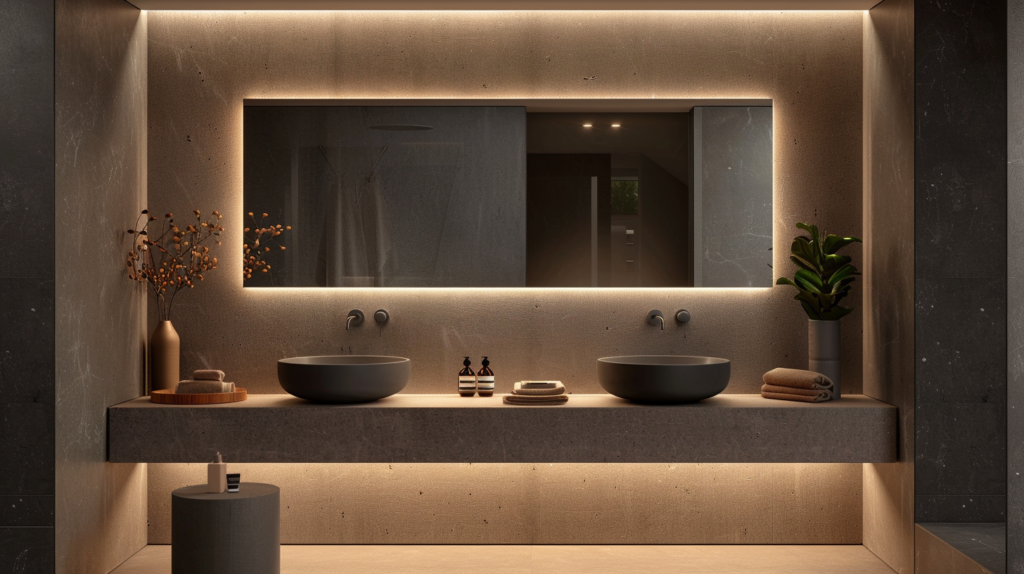
The 3 Types of Lighting (the simple system)
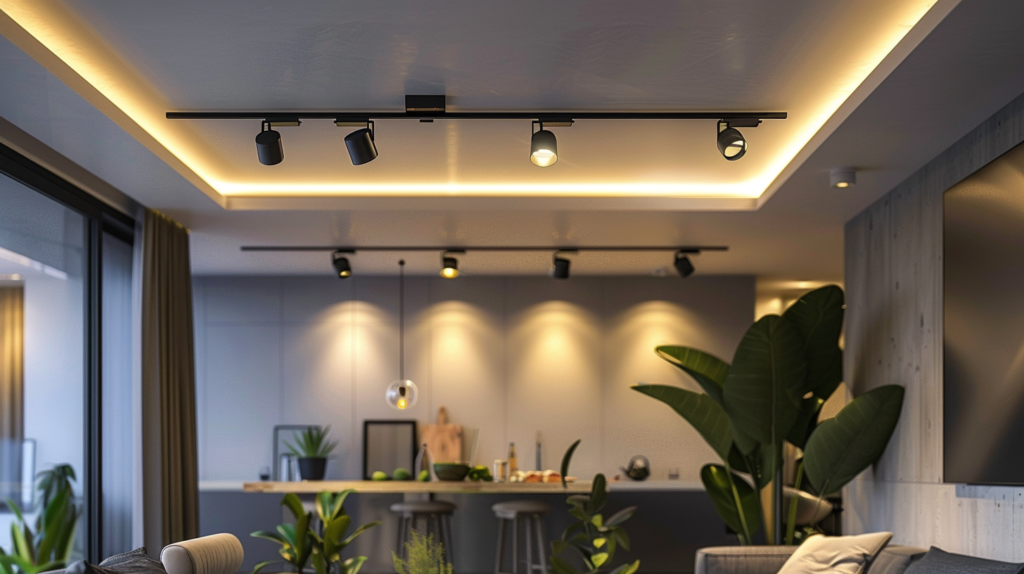
1) Ambient Lighting = the base light
This is your main overall light that lets you see the room safely.
Examples:
- ceiling lights
- recessed downlights
- cove lighting
- a central pendant
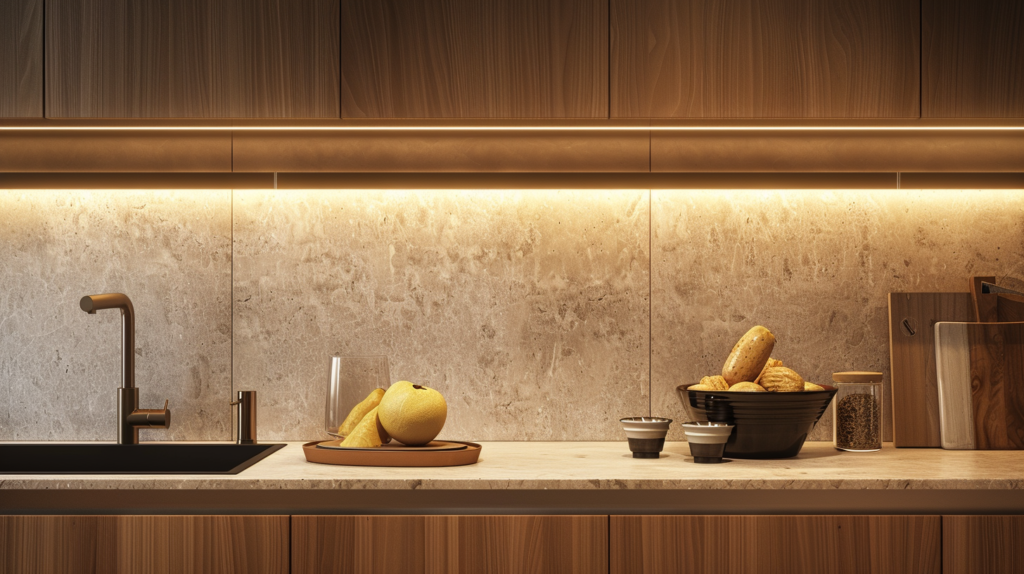
2) Task Lighting = work light
This is for doing things: cooking, reading, makeup, desk work.
Examples:
- kitchen under-cabinet lights
- bedside reading lights
- desk lamp
- vanity mirror lights
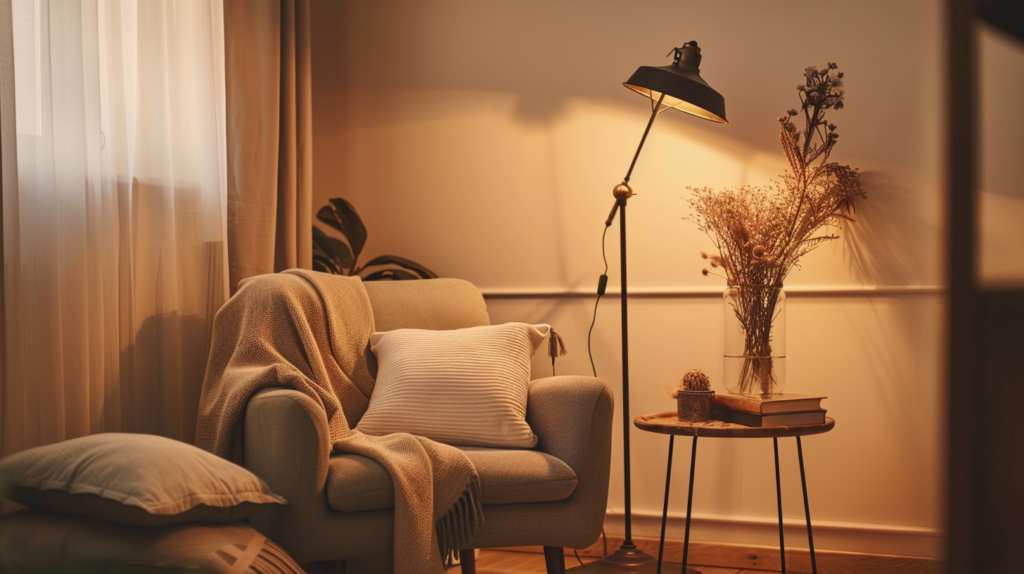
3) Accent Lighting = the glow / mood / luxury
This is what makes your space look expensive and “styled.”
Examples:
- wall washers
- picture lights
- LED strips behind TV
- floor lamp in a corner
- spotlights on art/plants
The Golden Rule (fixes most homes)
Use at least 2 lighting types in every room.
Best case: all 3 (ambient + task + accent).
Placement rules (so it looks clean, not random)
Living Room
- Ambient: ceiling/recessed or cove
- Task: floor lamp near sofa corner OR table lamp on side table
- Accent: wall light, LED behind TV, spotlight on art/plant
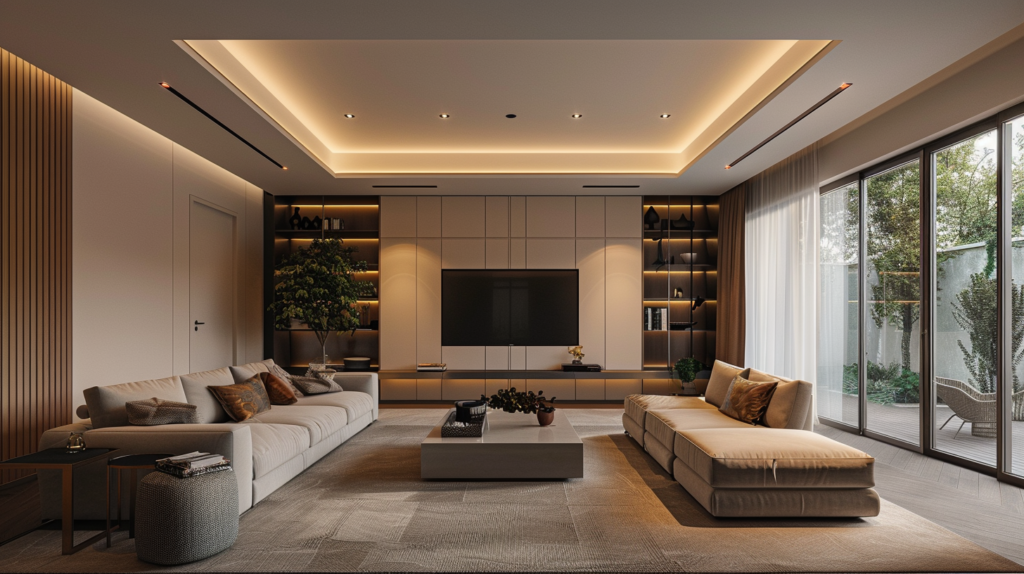
Pro tip: put a lamp in a “dead corner” and the room instantly feels bigger.
Bedroom
- Ambient: soft ceiling light (not harsh)
- Task: bedside reading lights or table lamps
- Accent: LED behind headboard / soft wall sconce / corner floor lamp
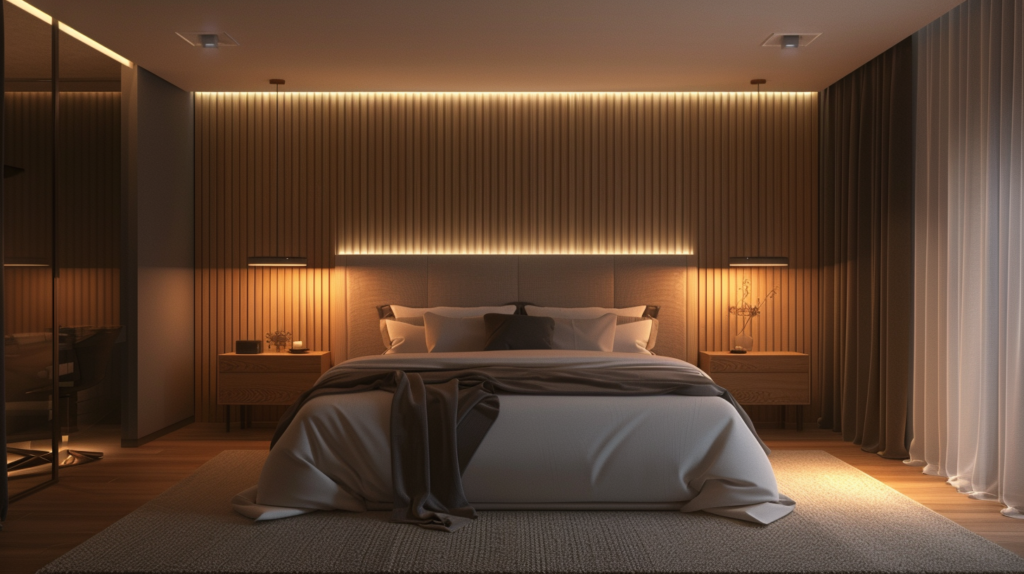
Pro tip: avoid one strong ceiling light only. It gives “clinic energy.”
Kitchen
- Ambient: ceiling downlights
- Task: under-cabinet lights (this is the game changer)
- Accent: pendant above island (if you have one)
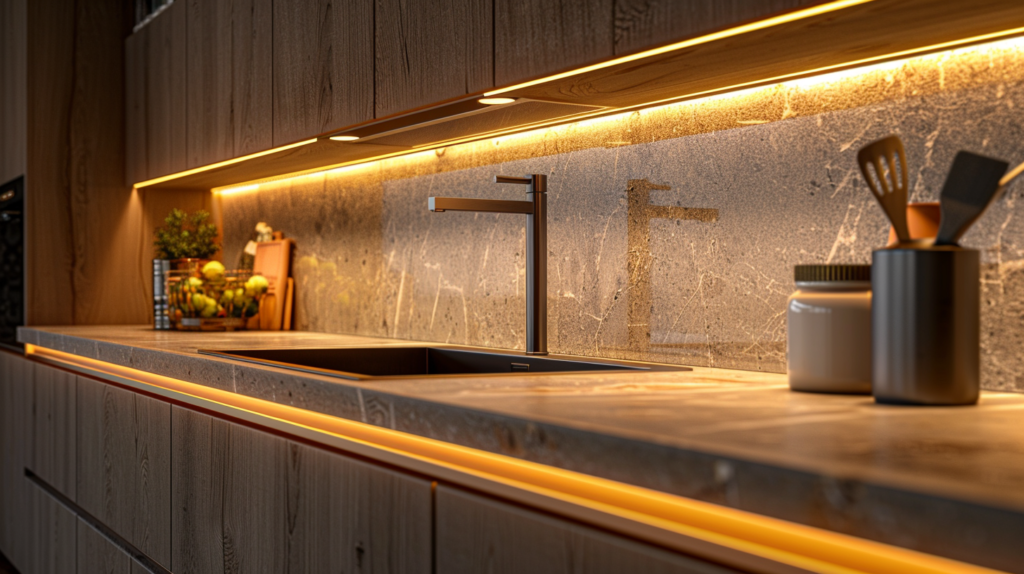
Pro tip: task lighting matters most in kitchen. If you skip it, the kitchen always feels off.
Bathroom
- Ambient: ceiling downlight
- Task: mirror lighting (two sides or above)
- Accent: niche LED / soft strip under vanity (if possible)
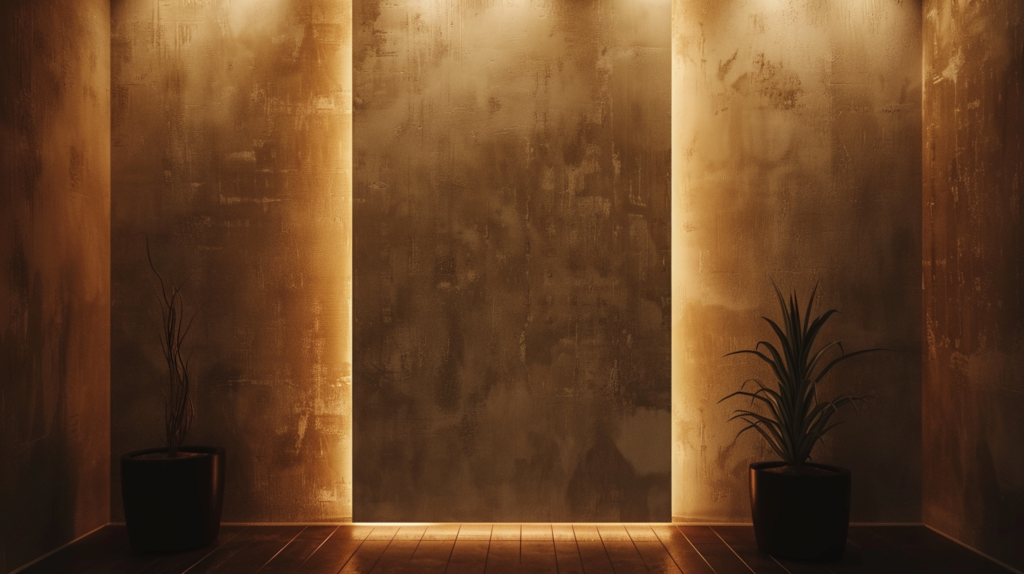
Pro tip: don’t rely on a single ceiling light. It creates harsh shadows on the face.
Color temperature (don’t overcomplicate it)
If you want cozy + expensive:
- Warm / warm-neutral lighting is safest for homes
If your space feels “yellow” or “blue,” you probably mixed different temperatures in one room.
Easy designer move: keep one lighting “tone” per room so everything feels consistent.
Dimmers (secret weapon)
If you do ONE upgrade: add dimmers.
Same lights, totally different mood at night.
Common lighting mistakes (avoid these)
- Only one ceiling light in the whole room
- Lights placed randomly with no plan
- Cold, harsh lighting that makes everything feel sterile
- No lamps at all (flat lighting)
- Too many spotlights (ceiling looks busy)
- Ignoring shadows (especially in bathrooms)
FAQ
Q: What’s the easiest way to upgrade lighting without renovation?
Add 2 lamps + 1 accent LED. That’s it.
Q: Are spotlights enough?
No. They give light, but not mood. You still need lamps/accent.
Q: What makes lighting look “luxury”?
Layering + soft glow + highlight zones (not just one bright source).