Small Entryway Setup (Tiny Space, Big Impact)
Why your entryway matters (even if it’s tiny)
Your entryway is the first impression of your home. If it’s messy, the whole home feels messy.
The goal isn’t decoration. It’s function + clean look.
10-Second Cheat Sheet
A perfect small entryway needs:
- drop zone (keys, wallet, sunglasses)
- mirror (light + last look)
- storage (shoes + bags)
- one light source (lamp/sconce)
- one “styled” moment (plant/art)
Step 1: Choose your entryway type
Pick what you have:
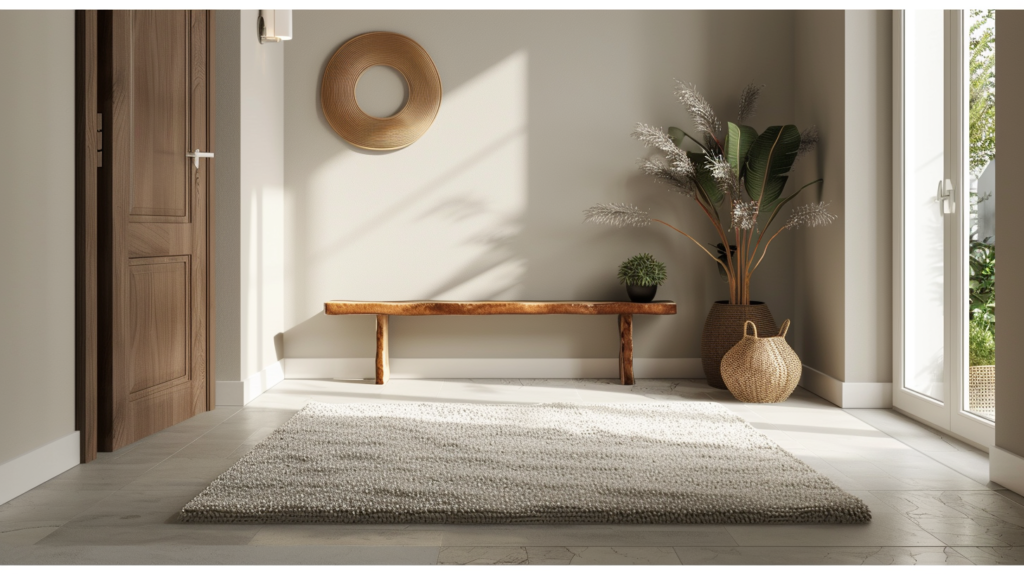
- A) Narrow hallway entry
- B) Small wall near the door
- C) No entry (door opens straight into living room)
This decides your setup.
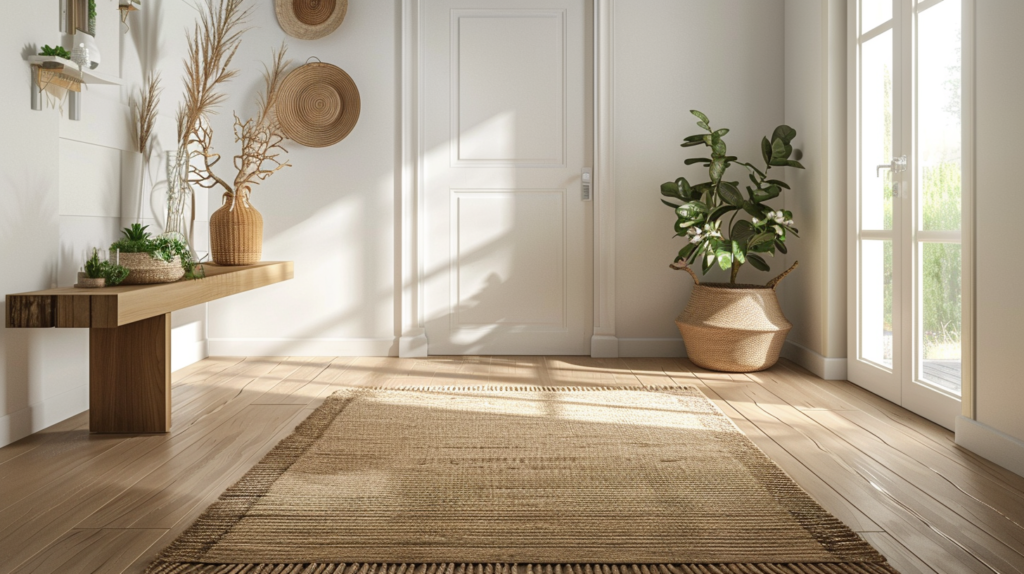
Step 2: The “Drop Zone” (non-negotiable)
You need a spot for daily items so they don’t end up everywhere.
Options:
- slim console table
- wall shelf
- tray on a bench
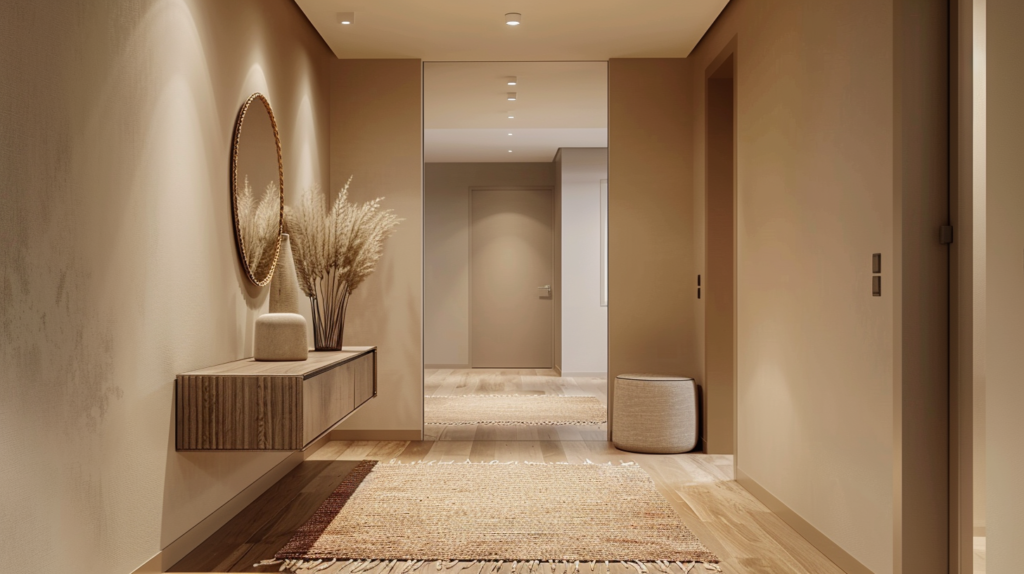
- floating drawer shelf
Rule: keep it minimal — one tray + one catch-all.
Step 3: Shoes (the biggest entryway problem)
If you have space:
- slim shoe cabinet (closed storage looks cleaner)
If space is super tight:
- vertical shoe cabinet
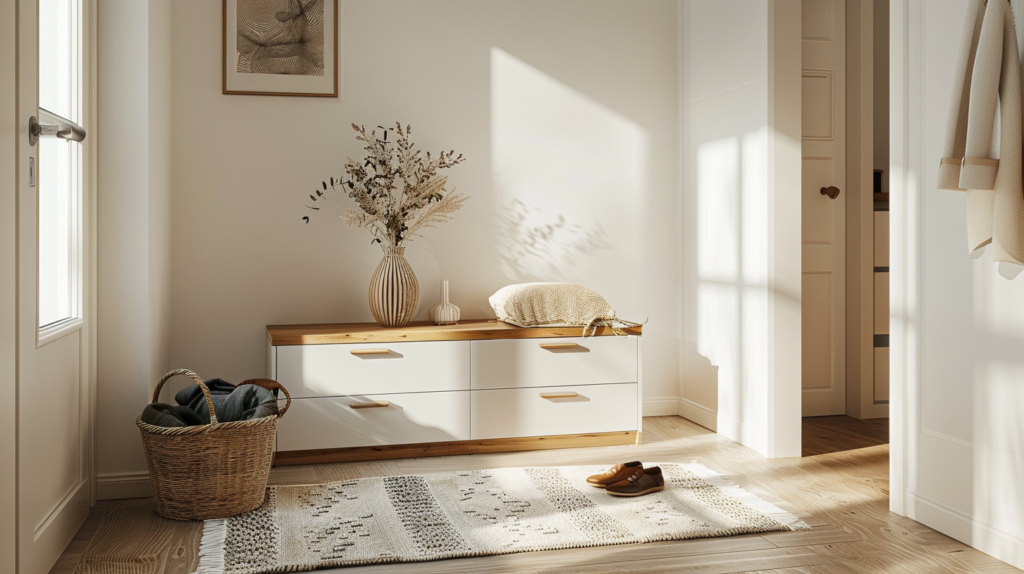
- bench with storage
- baskets (quick fix)
Rule: closed storage = instant “expensive look.”
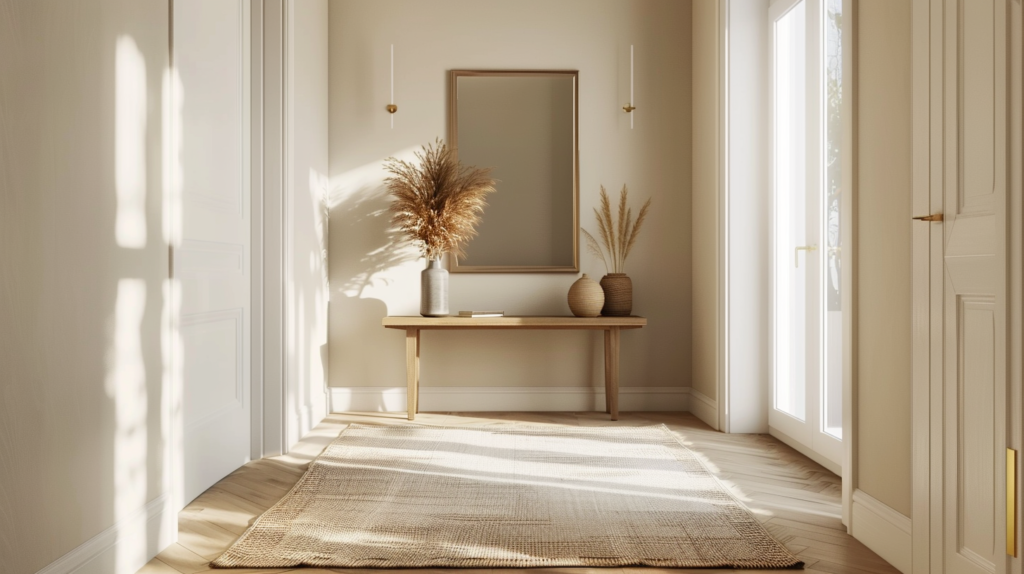
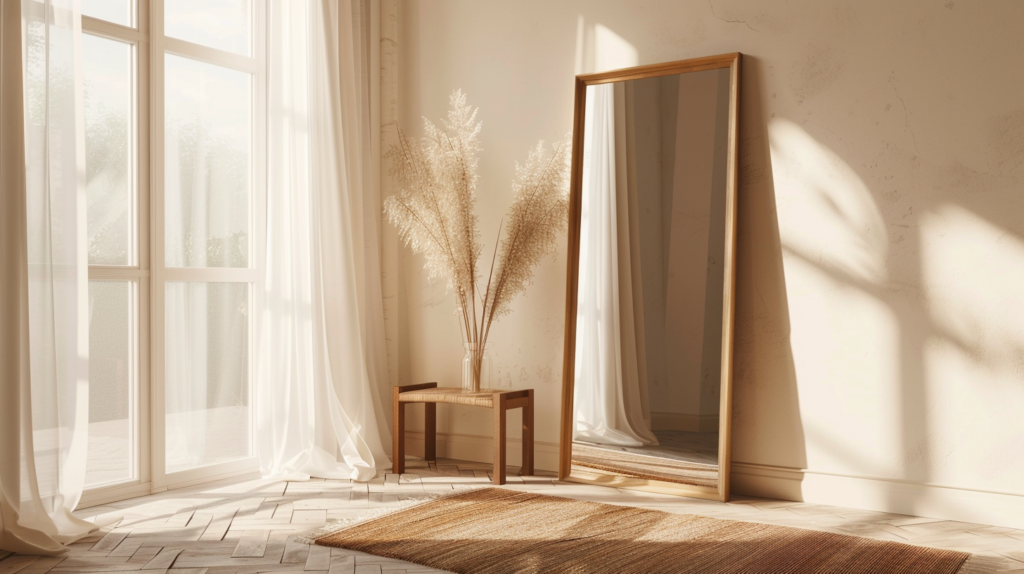
Step 4: Mirror placement (makes it look bigger)
A mirror is a cheat code:
- reflects light
- adds depth
- makes a narrow space feel wider
Best placements:
- above console
- beside the door
- full-length mirror at the end of the corridor
Rule: mirror should align with your drop zone (so it feels intentional).
Step 5: Hooks & hanging (bags, abayas, jackets)
Hooks are amazing if you keep them controlled.
Best setup:
- 3–5 hooks max
- aligned in one line
- match finish (matte black / brass / stainless)
Rule: If hooks look chaotic, the whole entry looks chaotic.
Step 6: Lighting (so it doesn’t feel “dead”)
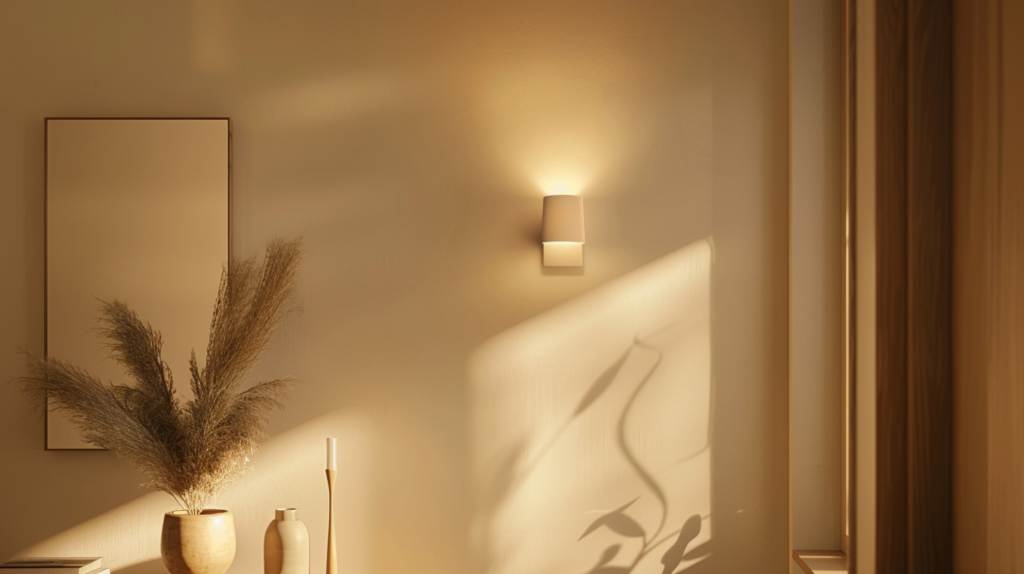
Small entries look cold if there’s only ceiling light.
Easy upgrades:
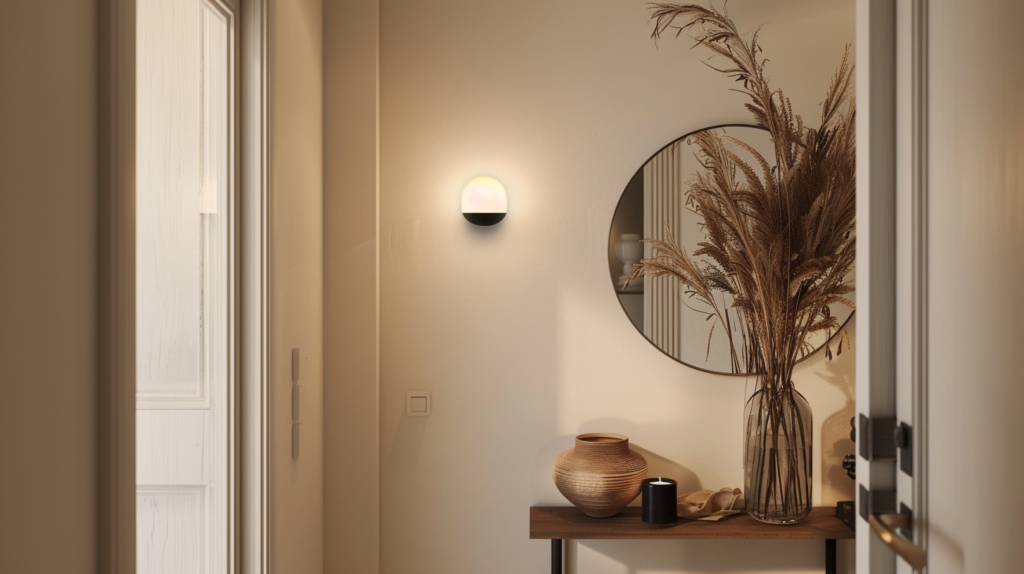
- wall sconce
- table lamp on console
- subtle LED strip under shelf
Rule: warm lighting makes the whole house feel more welcoming.
Step 7: Styling (1 minute, not a museum)
Use the 3-item rule:
- something tall (vase/lamp)
- something medium (book stack / bowl)
- something organic (plant/branch)
Leave negative space. That’s what makes it look premium.
Best layouts (choose one)
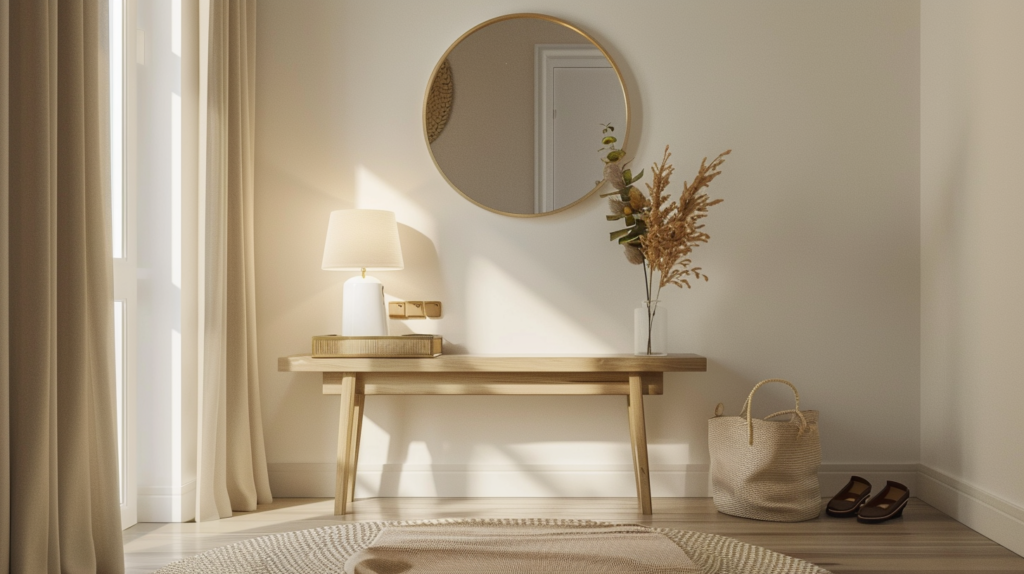
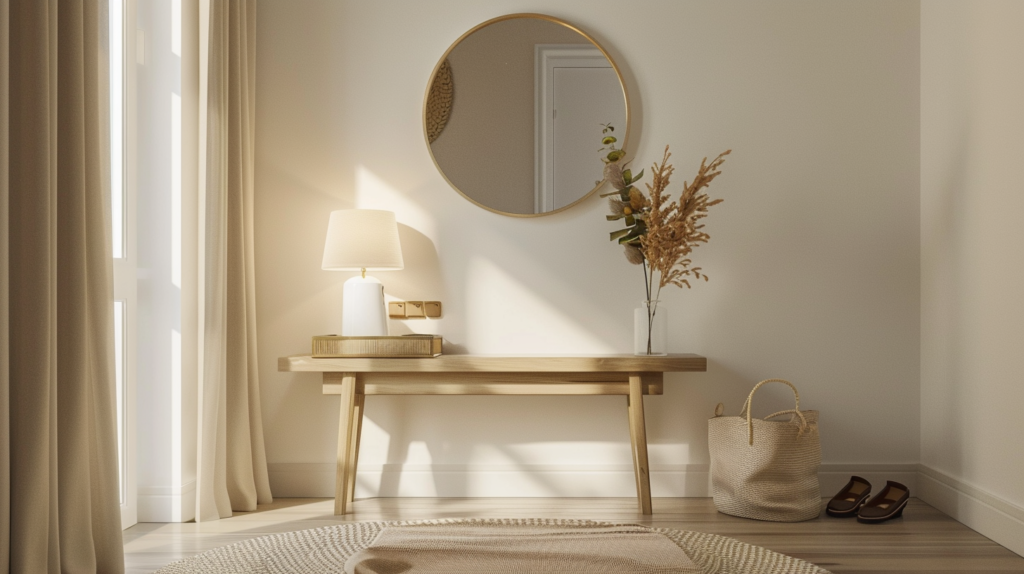
Layout A: Console + mirror (cleanest)
- slim console
- mirror above
- tray + lamp + small plant
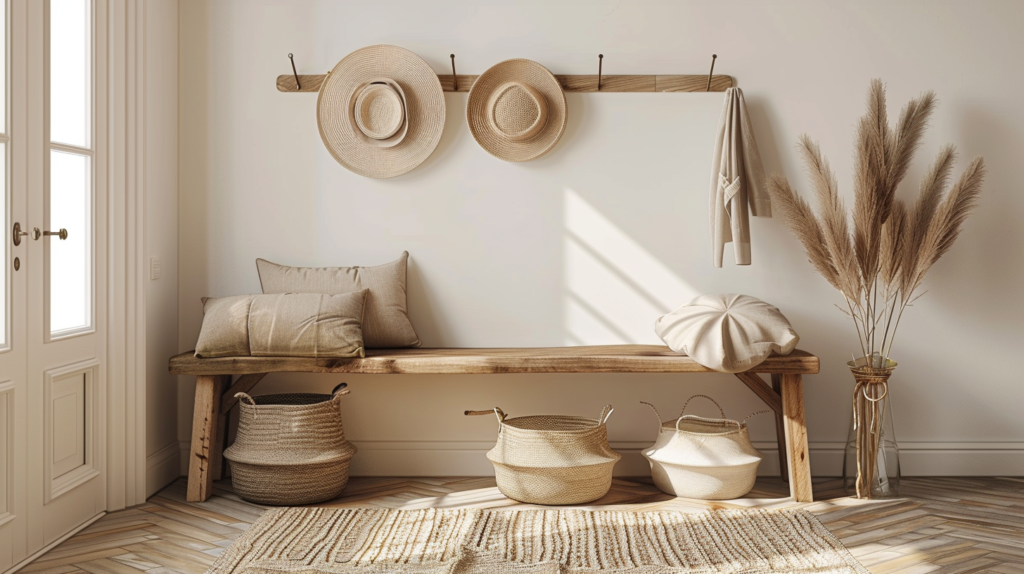
Layout B: Bench + hooks (most functional)
- bench for shoes
- hooks above
- basket under bench
Layout C: Floating shelf + mirror (ultra small space)
- floating shelf as drop zone
- mirror beside/above
- slim shoe cabinet nearby if possible
Common mistakes (don’t do these)
- open shoes everywhere
- too many tiny decor pieces
- random hooks in random places
- no mirror (space feels smaller)
- no drop zone (keys everywhere)
Quick Checklist (copy/paste)
- Drop zone (tray/shelf/console)
- Shoe storage (prefer closed)
- Mirror (above console or full length)
- Hooks (max 3–5, aligned)
- One warm light source
- 3-item styling moment
FAQ
Q1: My door opens directly to the living room—can I still create an entry?
Yes. Use a slim console or a floating shelf behind the door area + a mirror to define a “mini zone.”
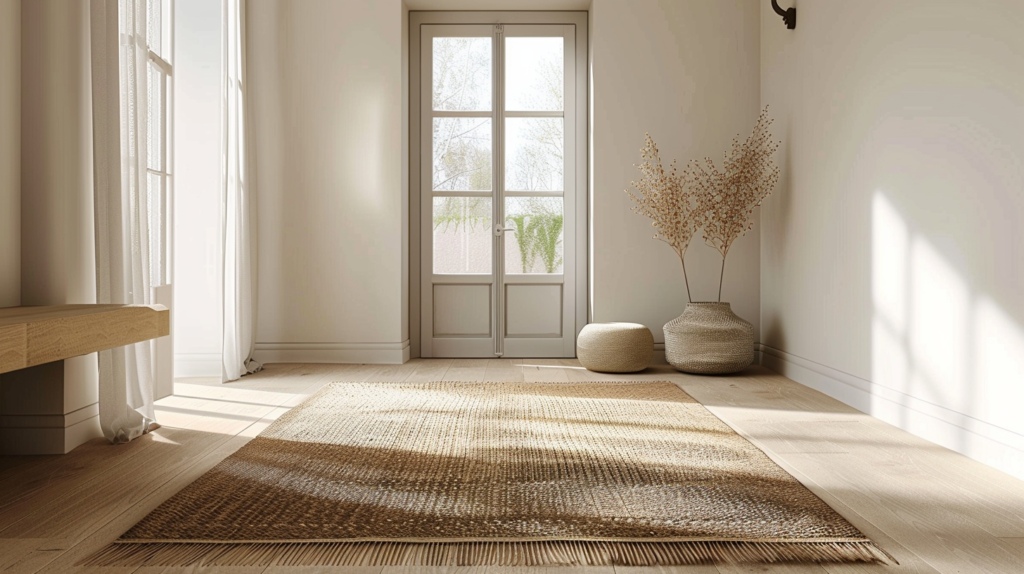
Q2: Should I use a rug in the entry?
Yes, but keep it practical: low pile and easy to clean.
Q3: What’s the fastest upgrade for a tiny entry?
Mirror + closed shoe storage + a small lamp. Immediate glow-up.
Want me to design your entryway layout?
Send me:
- a photo from the door looking inside
- your wall width
- and whether shoes must be hidden or can be open
…and I’ll give you the best setup.